Dust, pollen, bird droppings, and bushfire ash can cut a solar array's output by 15-25% before you even notice. We clean panels safely from the ground using a soft-bristle brush head and deionised water, restoring efficiency without chemicals, high pressure, or damage to the anti-reflective coating. Where ground access isn't possible, we work from the gutter line with full fall-protection, never standing on the panels themselves.
Equipment we use on every job.
The process, step by step.
Roof + array assessment
Before climbing or touching anything, we assess the array layout, identify any cracked panels, and confirm access points. Cracked panels are flagged not cleaned.
Ground-first attempt
We try every job from the ground first — safer, faster, and often gets 100% coverage on single-storey homes. Only if necessary do we work from the gutter line.
DI water + soft brush wash
Soft-bristle agitation followed by a generous pure-water rinse. No detergent, no chemicals — the only thing left on the panel is clean glass.
Sign-off + output check
A walk-around to confirm visual finish. If you have an inverter app, we encourage a before/after read in the same week to see the output lift.
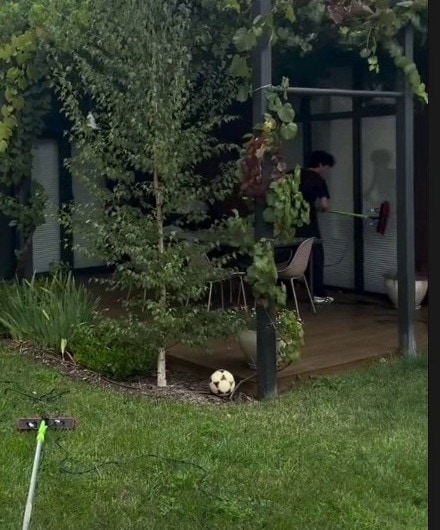
From a recent solar panel cleaning job.
What people ask before booking.
How often should I clean my panels?
In Canberra, once every 12-18 months is typical. More often if you are near eucalypts (sap), under flight paths, or had a heavy bushfire-smoke season.
Will it void my panel warranty?
No — the opposite. Most warranties require regular cleaning. We use the manufacturer-approved methods (pure water, soft brush, no high pressure, no chemicals) so you stay covered.
Can I just hose them off myself?
Tap-water hosing puts mineral spots back on the panel as it dries — actually reducing output by leaving a thin film. Pure water is what makes the difference.